Sticky by design
Their leaves are covered with tiny glands that produce glistening mucilage. Small insects become trapped on the surface, where the plant begins digestion.

Welcome, curious growers.
Beauty That Catches More Than Eyes
New to butterworts or refining a collection? Start with the basics, meet our plants, and learn to read each plant before changing its care.
Clear guidance for first plants and growing collections.
Start where you are
No prior carnivorous plant experience needed.
01 Discover
Butterworts are plants in the genus Pinguicula. Their flat, often jewel-like leaves use sticky secretions to capture small prey. That extra source of nutrients helps them live in habitats where ordinary plant nutrition can be limited.
Their leaves are covered with tiny glands that produce glistening mucilage. Small insects become trapped on the surface, where the plant begins digestion.
Butterworts grow as tidy leaf rosettes and send up delicate flowers. Their carnivorous habit is easy to miss until the leaves are viewed closely.
The genus grows across many climates. Identification, native range, and seasonal growth form are better guides than a universal watering rule.
02 Compare
Explore Pinguicula esseriana and the named hybrids 'Leilani', 'Johanna', and 'Pirouette'. Get to know their leaves, seasonal growth, and individual care needs.
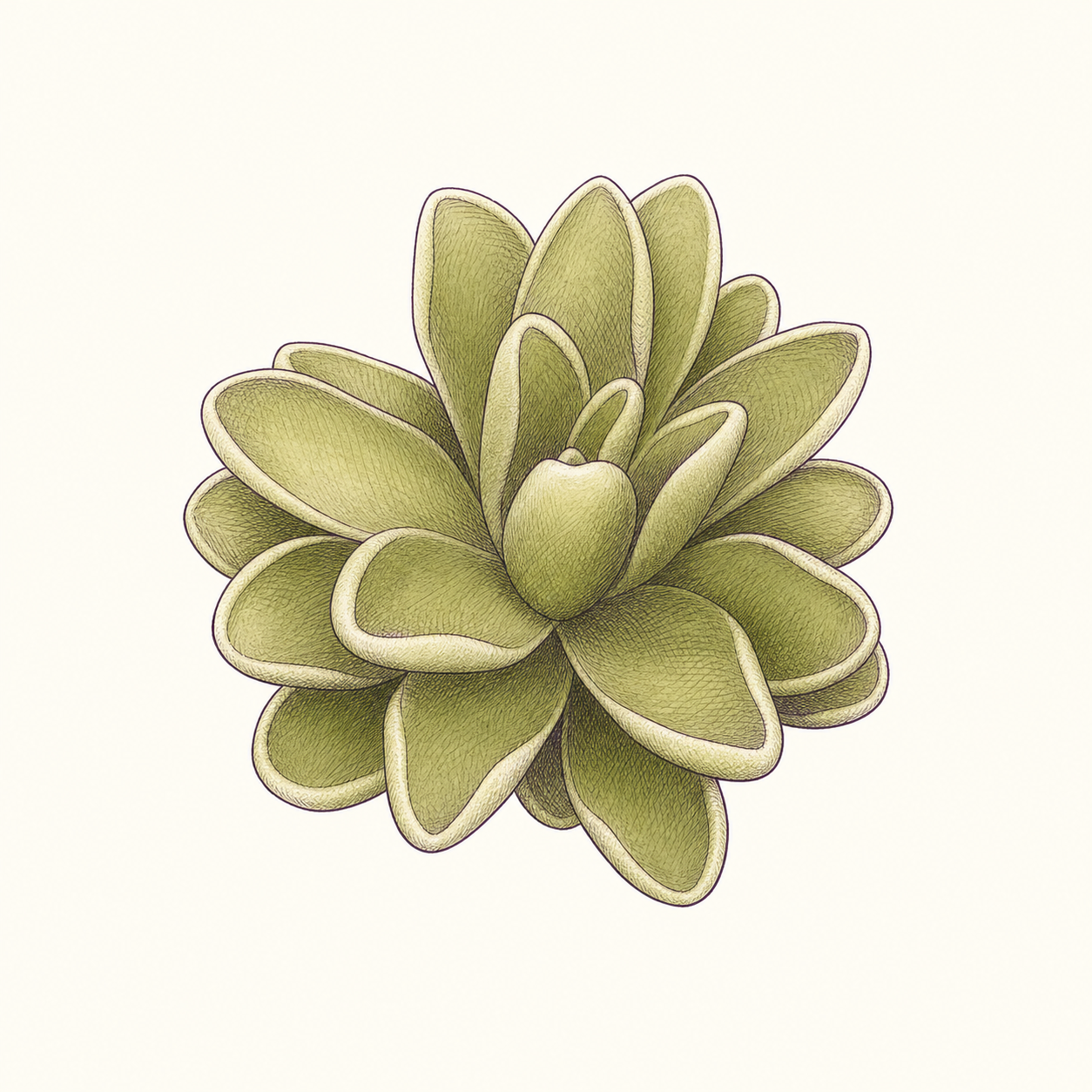
Botanical illustration
Mexican butterwort
Northeastern Mexico
Reduce moisture when growth slows or the rosette tightens.
Read plant & care guide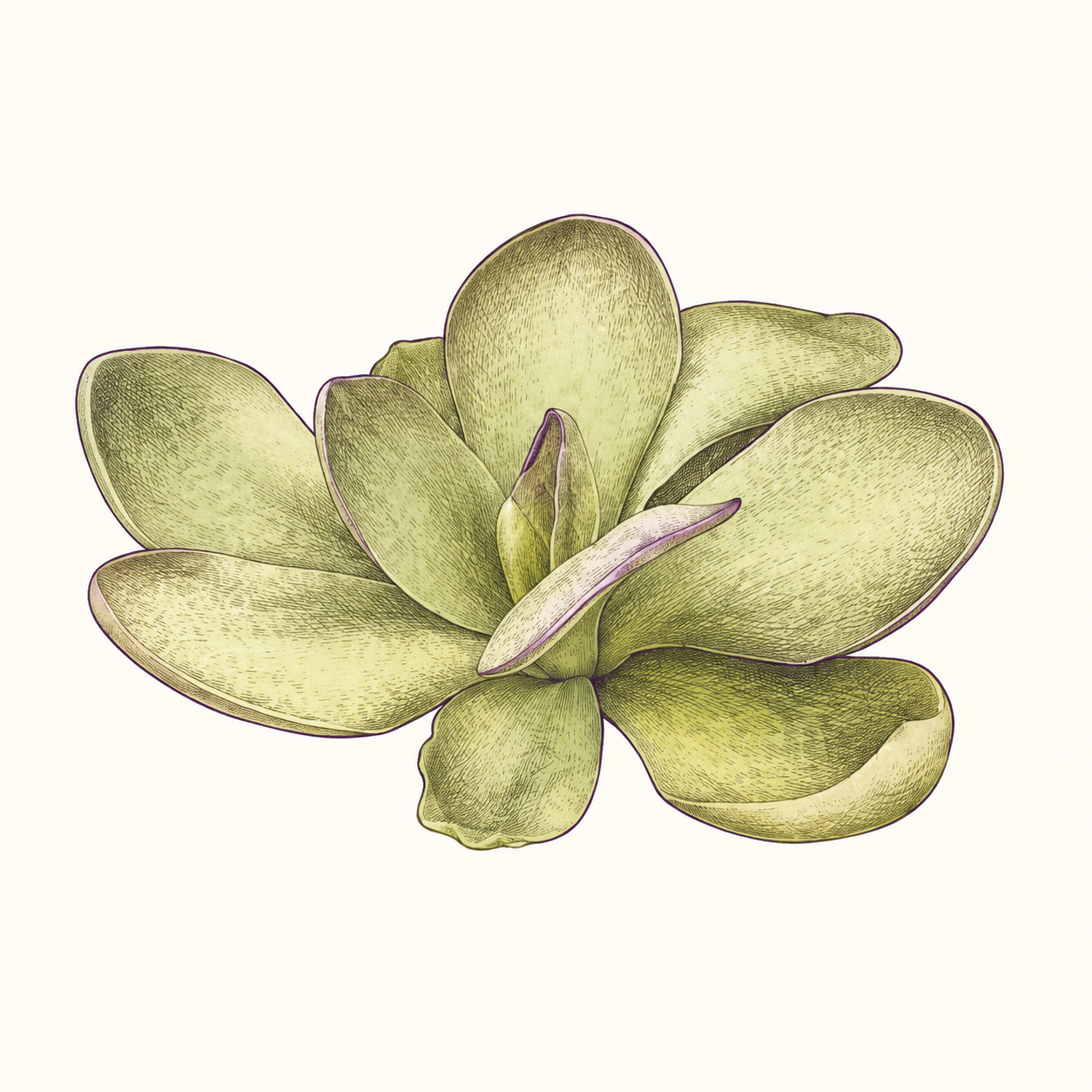
Botanical illustration
Mexican butterwort hybrid
Cultivated hybrid of Mexican species
May form smaller succulent leaves in winter; reduce watering if this happens.
Read plant & care guide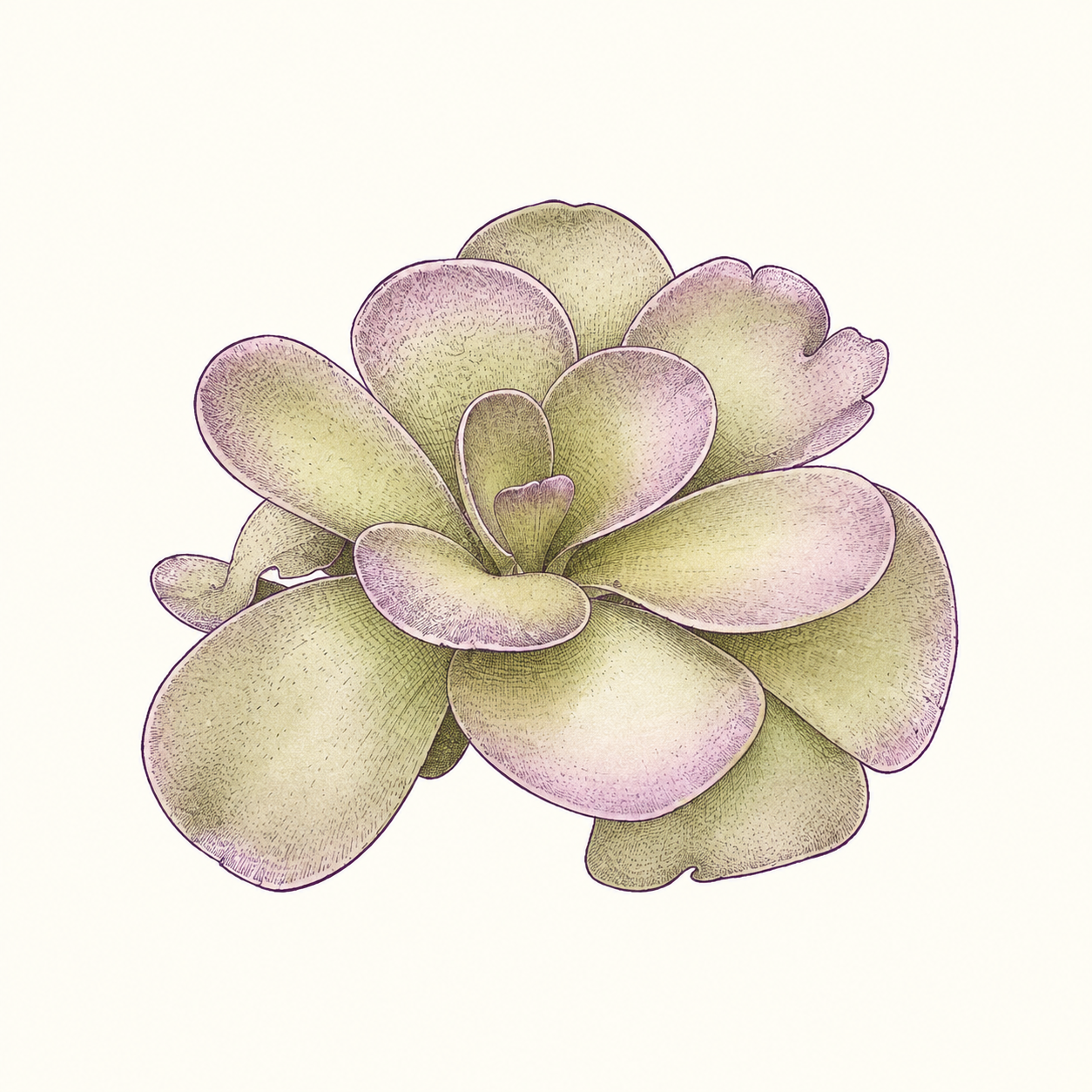
Botanical illustration
Mexican butterwort cultivar
Cultivated hybrid of Mexican species
Watch for a compact winter rosette and reduce moisture as succulent leaves form.
Read plant & care guide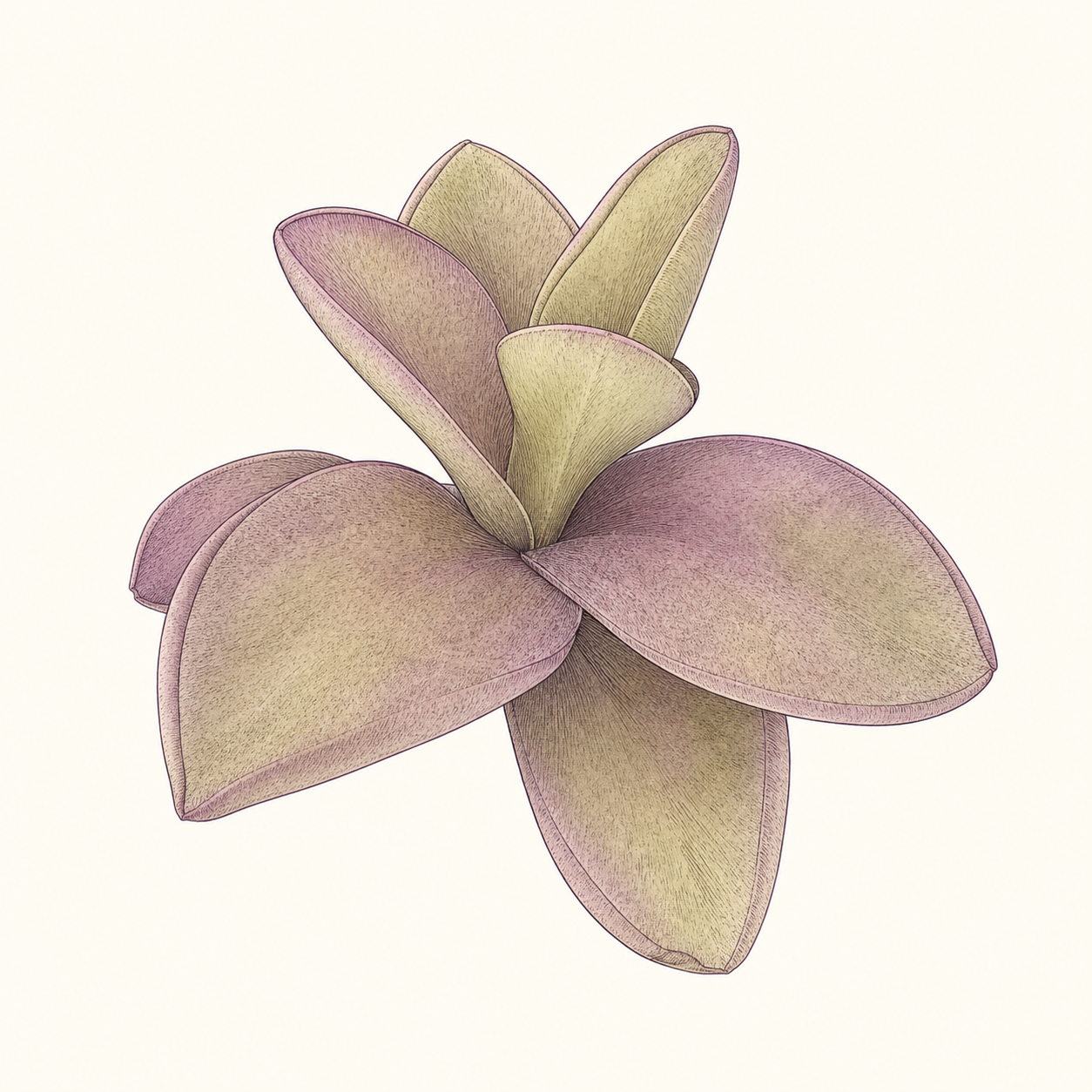
Botanical illustration
Mexican butterwort hybrid
Cultivated hybrid of Mexican species
Reduce watering when smaller succulent leaves replace the sticky carnivorous leaves.
Read plant & care guide03 Grow
Our identified plants are a Mexican species and three hybrids of Mexican species. Watch their leaves: sticky carnivorous growth and compact succulent growth need different amounts of moisture.
Watch for active growth before increasing water. Refresh labels and record the first new carnivorous leaves.
For the identified Mexican butterworts, provide bright, filtered light and low-mineral water. Keep active growth lightly moist and protect it from harsh heat.
Pinguicula esseriana, 'Leilani', 'Johanna', and 'Pirouette' can form smaller succulent leaves. Let that change guide a gradual reduction in watering.
Keep succulent growth drier, but continue regular moisture for sticky, active leaves. Follow each plant's growth stage rather than watering the whole collection on one schedule.
04 Connect
The Society is being built as an education-first home for curious beginners and experienced growers: careful enough for a collection label, welcoming enough for a first plant.
Specimen tables for comparing labels, growth forms, and seasonal changes.
Care clinics covering light, water quality, mineral media, and dormancy.
Field notes that turn careful observation into practical growing guidance.
Founding membershipProgram details will be announced here.
Shop coming soon